Microchip 101
What a microchip is, what the number means, and why registration is the part that actually reunites pets.

A pet microchip is a small implant, usually placed under the skin between the shoulder blades by a veterinarian. It stores one thing: an identification number.
The four pieces people mix up
- The microchip: the physical implant in your pet.
- The microchip number: the identification number stored on that implant.
- Microchip registration: the record that connects that number to you and your contact details.
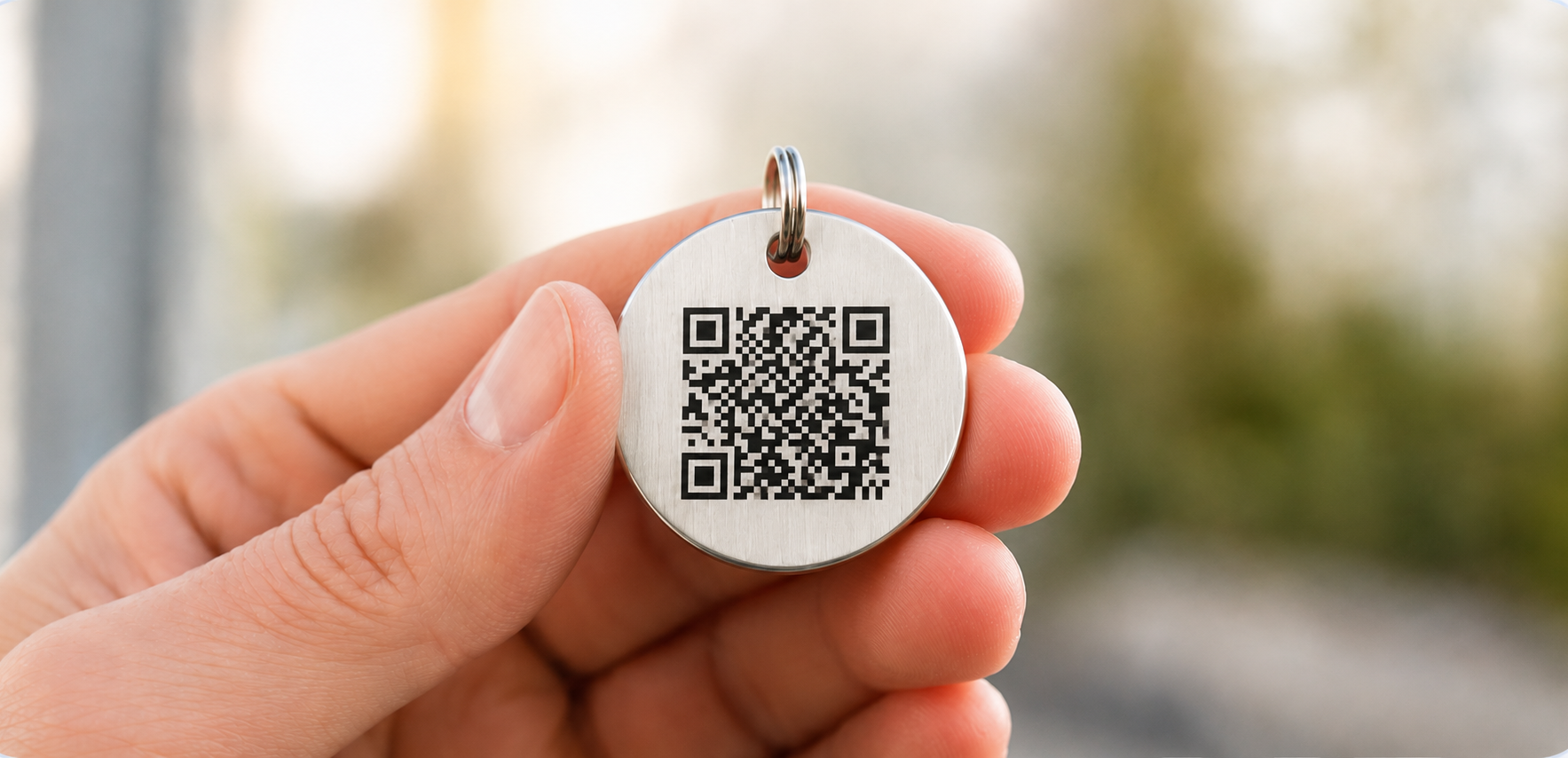
- A QR tag: a separate, visible tag anyone can scan with a phone.
A microchip does not broadcast location
Microchips have no GPS, no battery, and no signal of their own. A chip only responds when a compatible handheld scanner is passed over your pet at a clinic or shelter.
Microchip numbers
Microchip numbers come in different lengths depending on the manufacturer and standard used. HomeSafePet supports numbers that are 9, 10, or 15 digits. If you are unsure of your pet's number, your vet can scan your pet and read it for you, or it may be listed on your adoption or clinic paperwork.
Why registration matters
An unregistered chip returns a number and nothing else. Registration is what turns that number into a way to contact you. If your phone number or address has changed since your pet was chipped, updating your registration record is one of the most useful things you can do today.
Microchip and QR tag together
A QR tag helps in the first hours, when a neighbor or passerby finds your pet. A registered microchip helps later, if the collar is gone and your pet reaches a clinic or shelter. The two cover different moments of the same problem.